


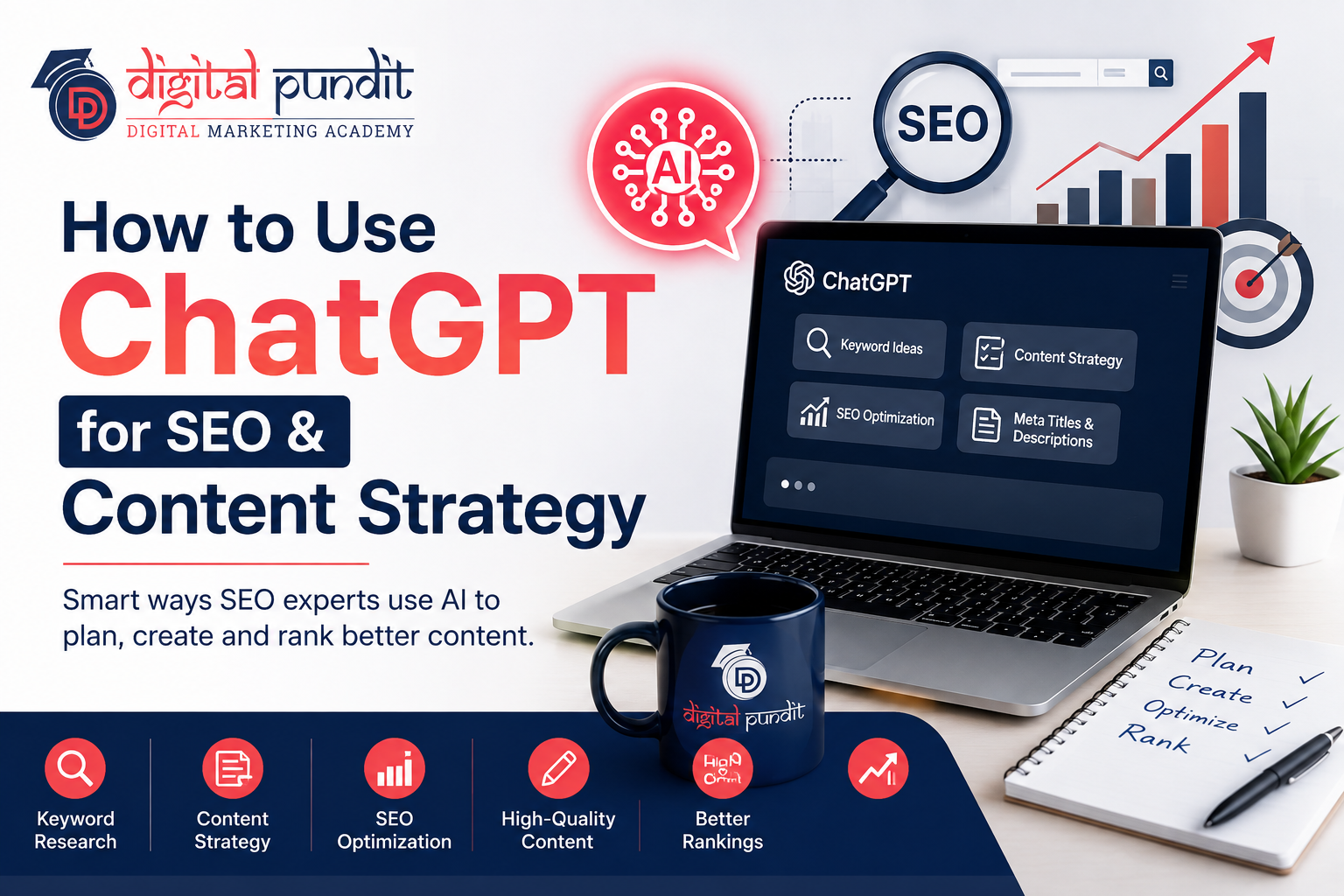
Artificial intelligence has completely changed the way SEO works. A few years ago, marketers spent hours researching keywords, creating content calendars, analyzing competitors, and writing blog posts from scratch. Today, ChatGPT has become one of the most valuable tools in an SEO professional’s toolkit, helping streamline these tasks while allowing marketers to focus on strategy instead of repetitive work.
However, one of the biggest misconceptions is that ChatGPT is only useful for writing articles. In reality, experienced SEO professionals rarely use it to generate an entire blog with a single prompt. Instead, they use it throughout the entire SEO process, from planning and research to optimization and content updates. The quality of the output depends not just on the AI but on the way you communicate with it.
In this guide, we’ll explore how SEO experts use ChatGPT to improve every stage of their content strategy and how you can apply the same techniques to create content that performs better in search results.
ChatGPT Starts Working Before You Write a Single Word
Successful SEO begins long before an article is written. Every high-ranking page starts with research. Understanding what users are searching for, why they are searching, and what competitors are already offering forms the foundation of an effective content strategy.
Rather than asking ChatGPT to simply “write an article about SEO,” professionals use it to explore search intent. They ask questions like what users really want to know about a topic, which subtopics deserve their own sections, and what questions people are likely to ask before making a decision.
For example, if your target keyword is “digital marketing course,” ChatGPT can help identify whether users are looking for course fees, job opportunities, certifications, online learning, or career growth. This allows you to create content that answers multiple user questions in one comprehensive guide instead of producing a generic article.
Building a Content Strategy Instead of Publishing Random Blogs
Many websites fail to rank because they publish content without a long-term plan. One article on SEO, another on social media, and another on email marketing may bring traffic individually, but they rarely establish authority.
SEO professionals use ChatGPT to develop content clusters rather than isolated blog posts. Instead of thinking about one article at a time, they ask AI to identify all the supporting topics related to a main keyword.
Imagine you’re targeting “SEO Services.” Instead of creating just one page, ChatGPT can help you identify related topics such as technical SEO, local SEO, keyword research, link building, content optimization, Core Web Vitals, Google Search Console, and AI-powered SEO tools. Publishing interconnected articles around these subjects helps search engines recognize your website as an authority in that niche.
This strategy, known as topical authority, has become increasingly important as search engines continue to evolve.
Understanding User Intent Is More Important Than Keywords
Many businesses still focus only on keywords, believing that repeating a phrase several times is enough to rank. Modern SEO works differently.
Google’s algorithms have become much better at understanding why people search. Someone typing “best CRM software” expects comparisons and reviews, while someone searching “what is CRM” is looking for educational content.
ChatGPT helps marketers understand these differences. By analyzing user intent, it becomes easier to structure content that directly answers readers’ expectations. This improves engagement, reduces bounce rates, and increases the likelihood of ranking higher.
The goal is no longer to write for search engines but to write for people while helping search engines understand your content.
Research Competitors Without Copying Them
One of the smartest ways professionals use ChatGPT is competitor analysis.
Before writing an article, they study what already ranks on Google and then ask ChatGPT to identify potential gaps. Instead of recreating existing content, they look for opportunities to make their article more useful.
For instance, if competing blogs explain SEO basics but ignore AI-powered optimization, voice search, or Google’s AI Overviews, those become opportunities to add unique value. This creates content that is more comprehensive and gives readers a reason to choose your article over others.
Great SEO is rarely about copying competitors. It’s about finding what they missed.
Creating Better Content Briefs
A detailed content brief often determines the quality of the final article.
Instead of immediately writing, SEO professionals use ChatGPT to organize ideas. They identify the target audience, define the primary search intent, create logical headings, list related topics, prepare FAQs, and determine opportunities for internal linking.
This planning stage ensures every article has a clear structure before a single paragraph is written.
When writers receive detailed content briefs, the final result becomes more consistent, easier to optimize, and more useful for readers.
Writing Faster Without Sacrificing Quality
One of ChatGPT’s greatest advantages is eliminating writer’s block.
Instead of staring at a blank page, marketers generate outlines, introductions, section ideas, and first drafts within minutes. This significantly reduces production time.
However, experienced SEO professionals never publish AI-generated content without editing it.
They add real examples, personal experiences, industry statistics, case studies, expert opinions, and practical insights that AI alone cannot provide. These additions improve credibility while helping meet Google’s expectations for Experience, Expertise, Authoritativeness, and Trustworthiness.
Think of ChatGPT as an intelligent assistant rather than a replacement for human creativity.
Optimizing Existing Content Often Delivers Better Results
Many businesses believe they need to publish new blogs every week to improve SEO.
In reality, updating existing content can often produce faster ranking improvements.
SEO professionals use ChatGPT to review older articles and identify opportunities for improvement. It can suggest clearer introductions, stronger conclusions, missing FAQs, additional subtopics, better readability, and updated information.
Refreshing content keeps articles relevant while signaling to search engines that the information remains current and valuable.
Instead of constantly chasing new topics, improving your best-performing pages often delivers a higher return on investment.
Preparing Content for AI-Powered Search
Search is changing rapidly with the introduction of AI-generated search experiences such as Google AI Overviews.
This means content should not only target keywords but also provide clear, direct answers to common questions.
SEO experts use ChatGPT to rewrite sections in a way that is easier for AI systems to understand. They simplify explanations, answer questions directly, organize information logically, and ensure important points are presented clearly.
Content that is easy for both readers and AI systems to interpret is more likely to gain visibility in the future.
Improving User Experience Alongside SEO
Search rankings depend on more than keywords.
A well-written article should be easy to scan, simple to understand, and enjoyable to read.
ChatGPT helps improve readability by shortening complex sentences, organizing ideas into logical sections, improving transitions, and suggesting engaging headings.
Better readability encourages visitors to stay longer on the page, increasing engagement signals that indirectly support SEO performance.
Turning One Blog Into Multiple Marketing Assets
Creating a blog requires significant effort, so successful marketers maximize its value.
Instead of publishing an article once and moving on, they use ChatGPT to repurpose it into LinkedIn posts, email newsletters, YouTube scripts, Instagram captions, Facebook posts, short-form videos, podcast outlines, and downloadable guides.
This approach saves time while maintaining consistent messaging across multiple marketing channels.
One high-quality blog can become weeks of valuable content.
The Human Element Still Matters
Despite its impressive capabilities, ChatGPT is not a replacement for strategic thinking.
The most successful SEO campaigns combine artificial intelligence with human expertise. AI can organize information, accelerate research, and generate ideas, but only experienced marketers understand audience behavior, business goals, and brand positioning.
Readers also recognize authenticity. Articles that include personal experience, original insights, customer success stories, practical examples, and expert recommendations naturally build more trust than generic AI-generated content.
The future of SEO belongs to professionals who know how to combine technology with creativity.
Looking Ahead
Artificial intelligence will continue to shape how people search for information online. Search engines are becoming better at understanding context, intent, and content quality rather than simply matching keywords.
Businesses that learn to use ChatGPT strategically instead of relying on it as a shortcut will have a significant advantage. From keyword research and content planning to competitor analysis and optimization, AI has become an essential part of modern SEO workflows.
The key is understanding that ChatGPT is not just a writing tool. It is a research assistant, brainstorming partner, content strategist, and productivity enhancer. When used thoughtfully, it helps marketers create content that is not only easier to produce but also more valuable for readers.
Final Thoughts
ChatGPT has transformed the way SEO professionals approach content strategy, but success doesn’t come from asking AI to write an article in one click. It comes from using AI throughout the entire content creation process, including research, planning, optimization, competitor analysis, content updates, and performance improvements. Businesses and marketers who combine AI with strong SEO fundamentals, user-focused content, and human expertise are far more likely to achieve long-term organic growth.
If you want to learn how to use tools like ChatGPT alongside practical SEO, Google Ads, content marketing, social media marketing, and the latest AI-powered digital marketing strategies, Digital Pundit is one of the best digital marketing academies in Ahmedabad. With experienced mentors, live projects, industry-oriented training, and hands-on learning, Digital Pundit helps students, professionals, and entrepreneurs build the real-world skills needed to succeed in today’s competitive digital marketing landscape.
If you’d like this blog to rank even better, I can also rewrite it using AEO (Answer Engine Optimization) and Google AI Overview optimization, making it more likely to appear in AI-generated search results while still reading naturally.