

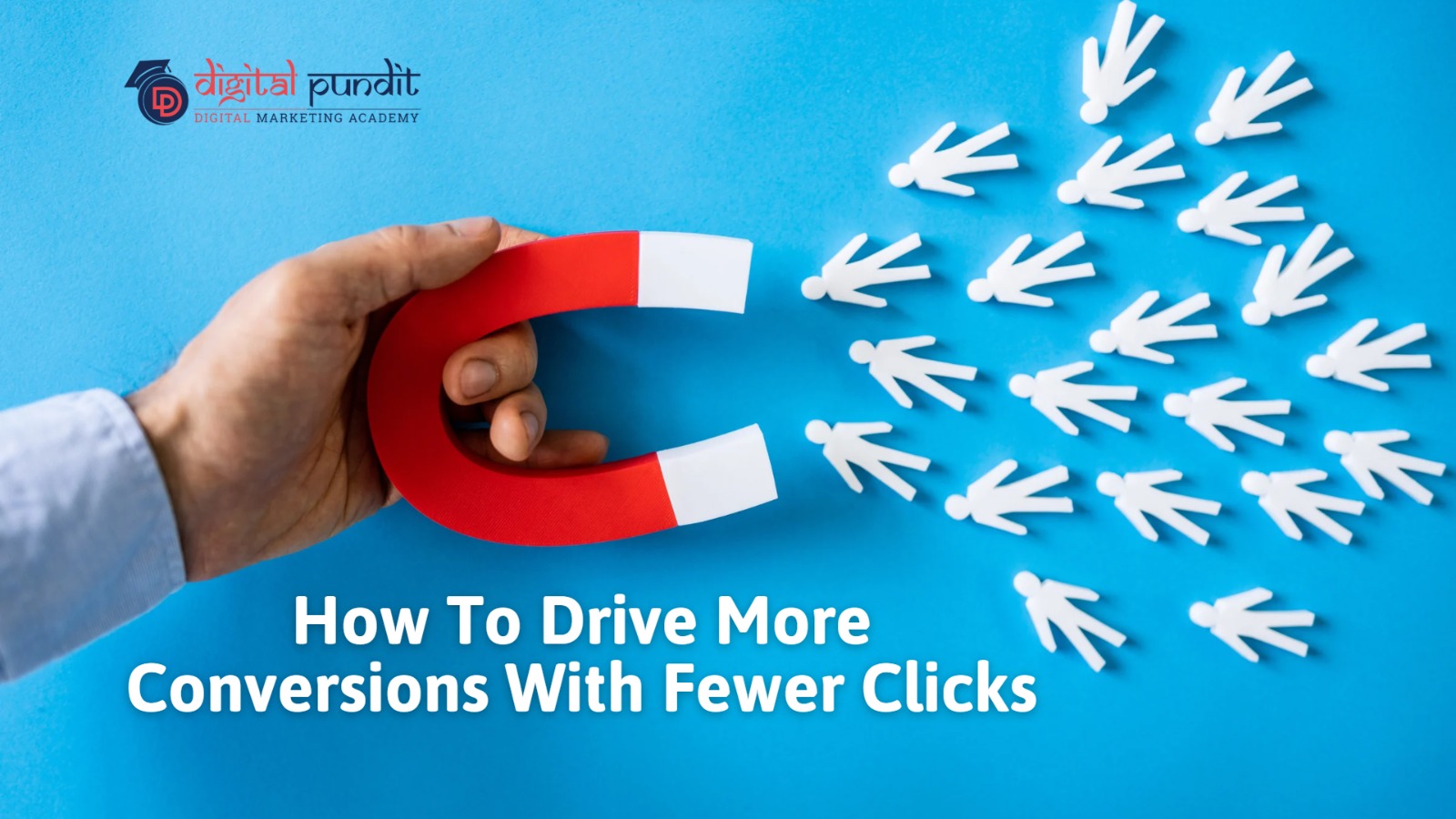
In the fast-moving world of digital marketing, every click matters. Users today are impatient, mobile-first, and flooded with distractions. In such a scenario, increasing conversions isn’t about adding more steps, forms, or CTAs. It’s about removing friction. The goal is clear: drive more conversions with fewer clicks.
This blog explores how you can simplify the user journey and increase conversion rates by making your process smoother, smarter, and more strategic. Whether you’re an e-commerce brand, a lead-generation business, or a service provider, this strategy works across the board. And if you want to truly master these skills, Digital Pundit offers in-depth training to help you optimize for higher conversions with minimal user effort.
Why Fewer Clicks Lead to More Conversions
The more clicks you ask from a user, the more chances you give them to drop off. Every additional click is an opportunity for doubt, distraction, or decision fatigue.
Studies show that reducing the number of clicks in a user journey can drastically improve conversion rates. Here’s why:
- Fewer distractions: A streamlined path keeps users focused on the goal.
- Reduced friction: Removing extra steps removes barriers.
- Better user experience: A quick and efficient process creates trust and satisfaction.
- Mobile-friendliness: Mobile users benefit the most from click-reduction strategies.
Now let’s look at how to achieve this.
- Start With a Clear Goal
To drive conversions, you must be clear about what a conversion means to your business—is it a product sale, form submission, free trial signup, or something else?
Once defined, all marketing materials, CTAs, and pages should revolve around driving users to that one goal with minimal steps.
✅ Pro Tip from Digital Pundit: Use tools like Hotjar or Google Analytics to identify where users drop off in the conversion funnel and restructure pages accordingly.
- Eliminate Unnecessary Clicks
Audit your funnel. If users must click “Learn More,” then “See Plans,” then “Contact Us,” you’ve already lost many.
Here’s how to reduce unnecessary clicks:
- Put your core offer on the homepage or landing page.
- Use anchor links that scroll users directly to sections of interest.
- Pre-load forms or lead captures on the same page.
- Optimize Your Landing Pages
A landing page should never be a maze. Its purpose is to guide, not distract. Keep it laser-focused:
- Highlight the value proposition above the fold.
- Include a single, powerful CTA.
- Use strong visual hierarchy—guide the eyes, guide the clicks.
Too many landing pages fail because they offer multiple links, menus, and distractions. Remember, simplicity sells.
- Use Smart CTAs
Not all calls-to-action are created equal. A vague “Click Here” demands more from users than “Get Free Quote” or “Start My 7-Day Trial.”
Tips for effective CTAs:
- Make them action-driven: “Download Free Guide,” “Book A Demo Now.”
- Place them strategically across the page.
- Use contrasting colors to make them pop.
✅ Learn at Digital Pundit: Their courses include deep-dives into CTA psychology and A/B testing techniques for better results.
- Leverage Micro-Conversions
Instead of pushing users to make a huge commitment right away, break the process into micro-conversions. These are small steps that lead to the final goal:
- Clicking a button
- Watching a demo
- Adding a product to the cart
- Signing up for a newsletter
Micro-conversions build trust, qualify interest, and keep users engaged—all while reducing bounce rate.
- Personalize the User Experience
Generic landing pages or email flows often force users to sift through irrelevant content. Use personalization tactics to deliver the right message to the right person at the right time — in fewer steps.
Examples:
- Show location-based offers.
- Retarget based on user behavior (abandoned cart, visited pricing page).
- Use dynamic content (change based on traffic source).
- Implement One-Click Features
If Amazon taught us anything, it’s that one-click checkout changes the game. Try implementing:
- One-click sign-ups using Google or social login
- One-click purchases (with saved payment info)
- Pre-filled forms based on cookies or CRM data
Reducing form fields and login friction can lead to huge jumps in conversion.
- Use Visual Cues and Directional Design
You can guide users toward the conversion goal without asking them to do more.
Examples:
- Use arrows, animations, or gaze-direction images pointing to CTAs.
- Reduce “visual noise” on key pages.
- Keep important buttons sticky or persistent (especially on mobile).
These tactics help reduce hesitation and increase clarity.
- Analyze and Optimize Continuously
Click-reduction strategies require ongoing testing and optimization. Use tools like:
- A/B testing platforms (Google Optimize, VWO)
- Heatmaps & session recordings
- Funnel visualization tools
By continuously refining each step, you can shrink the click-path and improve results.
✅ Digital Pundit Training: Learn how to analyze heatmaps, optimize user journeys, and test CTA variants with hands-on exercises in their digital marketing program.
- Educate and Empower Your Team
The final — and often most overlooked — step is training your internal team. Designers, content creators, copywriters, and marketers must all understand the value of reducing clicks in the user journey.
That’s where Digital Pundit comes in. As one of the leading digital marketing training institutes in Ahmedabad, Digital Pundit offers specialized programs that teach you:
- Conversion funnel optimization
- User behavior analytics
- Landing page best practices
- Click-through rate improvement strategies
Whether you’re a student, entrepreneur, or working professional, their modules are designed to deliver practical results with real-world application.
Final Thoughts
Conversions don’t require complexity. They require clarity.
In a world full of noise and distractions, the brands that win are the ones who make it easier for users to say “yes.” By removing unnecessary steps, crafting seamless journeys, and focusing on user intent, you can drive more conversions with fewer clicks.
And if you’re ready to truly master these strategies, don’t just experiment on your own. Enroll at Digital Pundit—where you’ll learn how to blend UX design, marketing psychology, and analytics to create click-efficient experiences that convert like magic.
Want to convert more in fewer steps? Learn from the best. Visit Digital Pundit today and take the first step toward smarter marketing.