

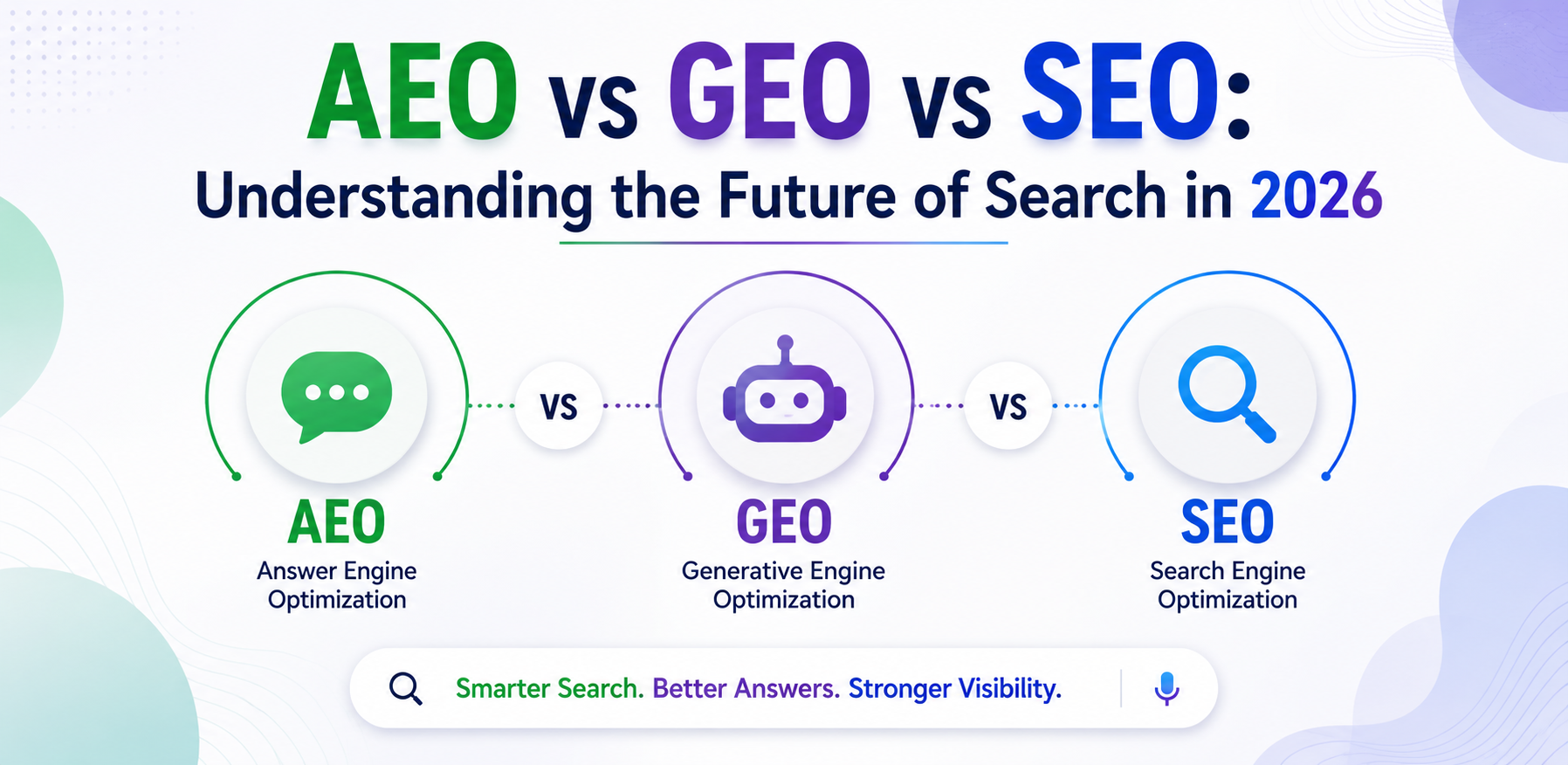
The way people search online is changing rapidly. A few years ago, ranking on Google was mainly about keywords, backlinks, and technical SEO. Today, search behavior looks completely different. Users ask detailed questions, rely on voice assistants, and increasingly use AI-generated answers instead of visiting multiple websites. Because of this shift, new concepts like AEO and GEO are becoming important alongside traditional SEO.
Google and AI-powered search systems are no longer focused only on matching keywords. They now try to understand user intent, context, and the actual meaning behind a query. This means websites that only rely on old SEO methods may slowly lose visibility in modern search environments. Search is evolving from simple ranking systems into intelligent answer systems.
1. Understanding Traditional SEO
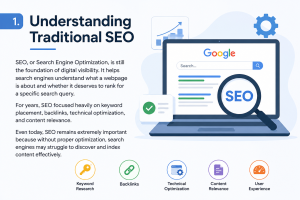
SEO, or Search Engine Optimization, is still the foundation of digital visibility. It helps search engines understand what a webpage is about and whether it deserves to rank for a specific search query. For years, SEO focused heavily on keyword placement, backlinks, technical optimization, and content relevance.
Even today, SEO remains extremely important because without proper optimization, search engines may struggle to discover and index content effectively. A fast website, proper structure, mobile optimization, and relevant content still play a major role in rankings. However, the difference is that modern SEO now focuses more on quality and usefulness rather than aggressive optimization tactics.
Google’s algorithms have become far more advanced. Instead of rewarding pages that repeat keywords excessively, they now prioritize content that genuinely solves user problems. This is why content quality and search intent matter more than ever before.
2. What is AEO?
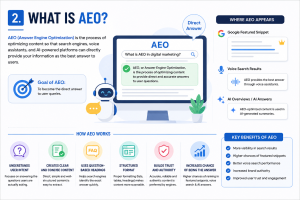
AEO stands for Answer Engine Optimization. This concept focuses on optimizing content for platforms that provide direct answers instead of simply displaying search results. Examples include featured snippets, voice assistants, and AI-generated answer sections.
When users search today, they often expect immediate responses. Someone asking “What is GEO in SEO?” wants a quick and clear explanation instead of scrolling through lengthy content. AEO helps websites become the direct source of those answers.
This changes the style of content creation significantly. Articles optimized for AEO usually include clear explanations, conversational language, and well-structured information. Search engines and answer systems prefer content that is easy to extract and understand quickly.
Voice search has accelerated the growth of AEO because people naturally speak in complete questions. Platforms like Google Assistant, Siri, and Alexa depend heavily on concise and trustworthy content when responding to users.
3. What is GEO?
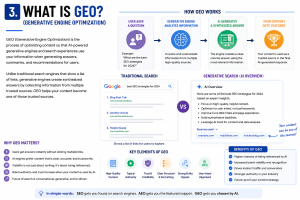
GEO stands for Generative Engine Optimization. It is one of the newest concepts emerging with the rise of AI-powered search experiences. Unlike traditional search engines that rank pages, generative engines create summarized answers by collecting information from multiple trusted sources.
This means visibility is no longer only about ranking on page one. Websites now need to become trusted references for AI systems. If an AI platform generates an answer using your content, your information influences the user even if they never directly visit your website.
Generative engines prioritize authority, trust, topical depth, and clarity. Websites that consistently publish useful and well-structured content are more likely to be referenced by AI-generated systems. This makes content quality even more important than before.
The rise of GEO is changing digital marketing strategies because businesses now need to think beyond traditional rankings. They need content that both humans and AI systems can trust easily.
4. Why Search Behavior is Changing
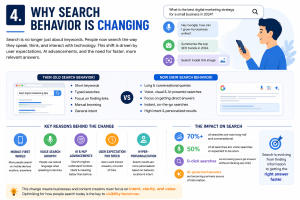
Search behavior has become more conversational over the last few years. Earlier, users typed short search phrases like “best SEO tools.” Today, users search with complete questions such as “Which SEO tools are best for small businesses in 2026?”
This shift matters because search engines are becoming better at understanding natural language. AI systems analyze meaning instead of depending only on exact keyword matches. As a result, websites need to create content that feels more human and less robotic.
People also expect faster answers now. They do not always want to visit multiple pages to gather information. Search engines recognize this behavior and increasingly provide direct summaries within search results.
Because of this, websites that focus on clarity and value have a better chance of surviving future algorithm changes.
5. Why Keyword Stuffing No Longer Works
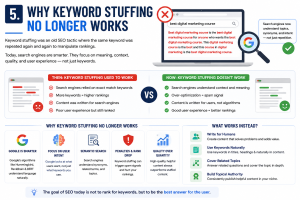
One of the biggest mistakes still seen online is excessive keyword repetition. Earlier SEO strategies often focused on placing the same keyword repeatedly throughout a page. While this worked years ago, modern algorithms have evolved significantly.
Google now evaluates context, topic relevance, user experience, and content quality much more deeply. Pages written only for algorithms usually feel unnatural and provide poor reading experiences. AI systems can identify this type of low-value content more effectively today.
Modern optimization focuses more on semantic relevance and topical understanding. Instead of repeating the same keyword unnaturally, successful content now covers related concepts and answers user intent naturally.
This is why modern SEO content feels more informative and conversational rather than heavily optimized for machines.
6. The Importance of Topical Authority
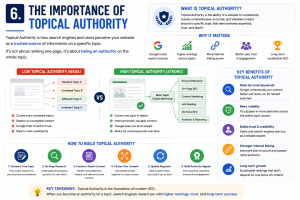
Topical authority has become one of the strongest ranking and trust signals in modern search. Search engines and AI systems prefer websites that consistently cover a topic in depth rather than websites publishing random disconnected content.
For example, a website that regularly publishes detailed articles about SEO, AI search, technical optimization, and search trends builds stronger authority in that niche over time. This increases trust not only for Google but also for AI-powered answer systems.
Websites with strong topical authority are more likely to appear in featured snippets, AI summaries, and voice search responses because search systems recognize them as reliable sources.
This means long-term consistency matters more than chasing viral traffic with unrelated topics.
7. Content Structure Matters More Than Ever
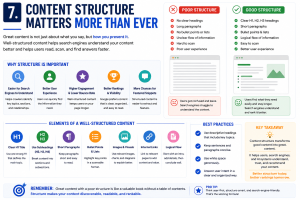
Content formatting now directly impacts discoverability. AI systems process structured information more efficiently than poorly organized content. Articles with clear headings, logical flow, readable paragraphs, and direct explanations perform better across modern search systems.
Good structure also improves user experience. Readers prefer content that is easy to scan and understand quickly. Search engines notice these engagement patterns and often reward better user experiences with stronger visibility.
The future of optimization is not only technical. It is also about communication clarity.
8. The Future of Search
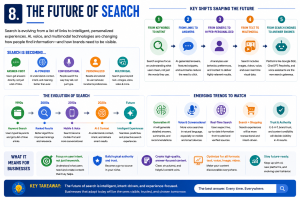
The future of search will likely become increasingly AI-driven. Search engines are moving toward generating answers instead of simply ranking links. This does not mean websites will disappear, but it does mean content strategies need to evolve.
Businesses and creators who understand SEO, AEO, and GEO together will have a stronger advantage in coming years. Traditional SEO still matters, but answer-focused and AI-friendly content is becoming equally important.
The websites that succeed in the future will not necessarily be the ones producing the highest quantity of content. Instead, they will be the ones creating the most useful, trustworthy, and understandable information.
Search is no longer just about ranking. It is about becoming a reliable source that both users and AI systems trust.
Conclusion
The future of search is evolving much faster than most businesses realize. Traditional SEO is still important, but modern visibility now depends on how well your content performs across answer engines and AI-driven search platforms as well. AEO helps your content become the direct answer users see, while GEO increases the chances of your information being referenced by AI-generated systems. Together, SEO, AEO, and GEO are shaping the next generation of digital marketing.
Businesses, marketers, and creators who understand these changes early will have a stronger advantage in the coming years. The focus is no longer only on rankings or traffic. It is now about creating useful, trustworthy, and well-structured content that genuinely helps users.
If you want to learn modern digital marketing strategies including SEO, AEO, GEO, AI search optimization, and advanced content marketing techniques, you can connect with Digital Pundit for professional digital marketing training and industry-focused learning.